
Itumbaha Complex

The Itumbahal complex is full of many bahas, nanies & chukas (the typical Newari names for narrow lanes connecting rows of household compounds and other compounds). Every compound is dotted with many votive stupas, sacred shrines, wells and sacred objects of worships. The proper shrine of Itumbahal is flanked by two big rectangular compounds of Tahanani in the west and Itumbahal courtyard in the east. The main entrance of Itumbahal shrine is from eastern courtyard of Itumbahal. The courtyard is connected by two narrow gullies of Chokachen Gulli in the south and Kilagul in the north. The eastern courtyard of Itumbahal is divided into two halves, northern half is known as Baha cho (top end of baha) and the southern Baha ko (lower end of baha). The northern border of proper Itumbahal shrine is shared with Taranani (The shrine of Goddess Tara) and Baku nani– a small shrine housing a votive chaitya in the south. There is no inter-connecting doorways opening towards those shrine of north and south. The proper Itumbahal is perfectly square shape with two-storey structure made of wood, bricks and clay. The area of proper Itumbahal shrine is – 7893.14 sq ft and it is located at ward No 26 of kathmandu metropolitan city.
De-Puja Agam Ghar

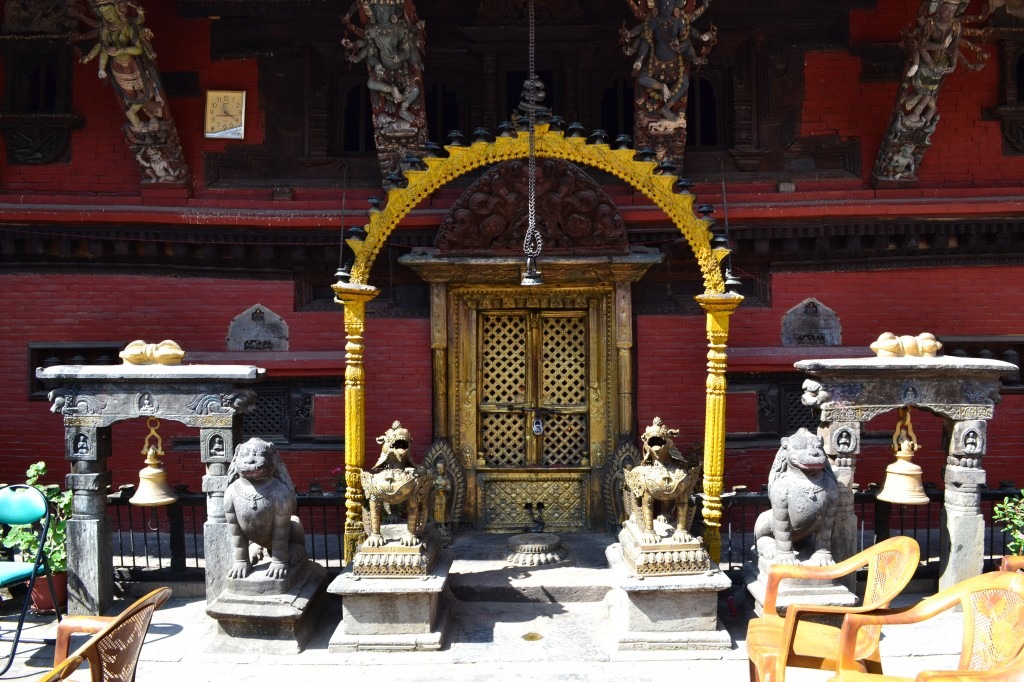
The De-paju Agam Ghar is located at the southern half (Baha ko) of the Itumbahal courtyard. It is the Agam Ghar of the deity of lineage, which opens for a month during month of Baisakh. The secret deity of lineage is believed to be brought from the gum-vihar at sankhu, by Keshchandra. The old looking shrine has been robbed by thieves several times. Many sacred deities have been stolen. A pair of stone lion is guarding the shrine. The beautifully carved windows and wooden tympanum grace the entrance of Agam Ghar. The old looking structure of two storeys is facing north. A beautifully carved Tympanum can be seen just above the entrance. A couple of blind window is located at both side of entrance. The 2nd floor is almost ruined structure with sloping roof, and a short varandha, without pinnacles. The old people in Itumbahal used to say that earlier there was a sloping lattice window, supporting the sloping tiled roof of 2nd floor, and from this lattice window an oil lamp (Dalucha) is hanged upto the entrance of Agam Ghar, at ground floor. The three gold polished pinnacle grace top of the sloping roof, but, its empty now. Looking back at the history of this structure; it was widely repaired around 1985 B.S. by Chakreswar Hiranya Vajra Bajracharya by raising funds and donations among sangha members. However, during the 1990 earthquake the entire top floor collapsed, the rain water trickled inside the Agam Ghar. Once again, the fund raised among sangha members for reparing, roof top, and save the Agam from destruction, still today it remained as partially repaired. The overall charge of De-Puja Agam ghar is given to Chakreswar of Itumbahal. The term expires as soon as he dies and charge is given to next Chakreswar, appointed by Itumbahal Sangha.
Sangha Tradition of Itumbaha

The sangha of Itumbahal consists of Shakya and Bajracharya family’s one of the largest sangha of Kathmandu valley, is destined to perform the numerous socio-religion activities: like guthi celebration, yearly and monthly festivals, daily ritual etc. Guthi is the socially organized people with common objectives of celebration of festivals, rituals, as well as to help unprivileged and bereaved families. SARVA SANGHA OF ITUMBAHA Itumbahal is one of the fully active Mahayana Buddhist Vihara (monastery), with vast Sangha, from the earliest days of its foundations in history. Unlike other Buddhist monastery, the newar Buddhist monasticism has a characteristic feature of non celibate monks, who live in their own homes near monastery, with married wife and children. The male issues of every family is ordained as monks in the monastery for a short period of four days, there after they give up celibate monkhood by disrobing, and they continue to be a member of monastic community for rest of their life. The membership of monastic community is known as sangha. The community of all the initiated members is called as sarva sangha .There are about 450 sarva sangha members from 118 families in Itumbahal. Once initiated person will automatically became a member of any other guthi or pucha, within Itumbahal, and he must fulfill the mandatory responsibilities entrusted as a Guthi member. THAYAPAS OF ITUMBAHA Thayapas are the senior most top position in Itumbahal, both from religious and social point of view. Thayapas have had an overall access to all social, religious and economic affairs of vihara. Thayapas are the short form of Thakalis, meaning ‘senior most one’ they are also known as Sthaviras or brave disciples. The tradition of Thayapas is believed to have been started by Keshchandra the founder himself, to run the affairs of vihara. There are altogether eleven Thayapas headed by main priest Muthayapa and his assistant Chakreswar. Both Muthayapa and Chakreswar are selected from family lineage with adequate qualifications like, top initiation (Dekha), seniority and perfect puja performer. Rests of the nine Thayapas are selected from the senior most brother of the descendent of nine families, provided he is ready to accept the position and act accordingly. Once selected, the official ritual process will run for about a week before enthroned on a appropriate, auspicious day as a ‘Sthavira’ of vihara. The process of enthronement of Sthaviras also known as Sthaviravisekh, particularly because they have had received the higher qualification like Kalasabhisekh, Bajrabhisekh, Ghantabhisekh, Muktabhisekh, Chatrabhisekh, Bastrabhisekh and Namabhisekh. The ten Thayapas represents the Dasa paramita, the tenfold wisdom of Buddhist teaching and Chakreswar as the central god. According to vajrayana Buddhism the eleven Thayapas represent the master of ten direction (dasadicacharya), and Chakreswar as a central one. The Thayapas have had separate seating (Asan) arrangement in the secret chamber of Agam Ghar. While performing puja they have had to sit on personal seating inside Agam. The Thayapas are venerated and respected by all and his orders are observed by all. The Thayapas are bound by vows to protect and defend the Itumbahal and sangha physically, verbally and mindfully (kaya, vaka, chitta,). The first among the equals of Thayapas is venerated as Muthayapa. Chakreswar, is the head of religious activities and leads all kinds of puja performance in Itumbahal, while Muthayapa is the head of sarva sangha, and he is responsible for social activities. The overall affairs of Itumbahal are carried on by that group of eleven Thayapas, mutual consultancy and discussion is necessary before taking any decision. The current names of enthroned Thayapas are as follows: Tri Ratna Shakya (Mu thayapa) Najar Man Shakya Mimlal Bajracharya Mani Kaji Shakya Gyan Kaji Shakya Hem Purna Nanda Bajracharya (Chakreswari) Krisna Shakya Surendra Shakya Siddhi Bahadur Shakya Vacant Sanuman Shakya GUTHIS OF ITUMBAHAL Ever since the foundation of Itumbahal by Keshchandra in eleventh century, the number of guthi’s have become active in maintaining and running the day-to-day affairs of Vihara. Keshchandra had founded the trusts to look after the maintenance and smooth functioning of monastic affairs. The trusts are known as ‘Guthis’ in local terminology. It contains a group of person organized to fulfill a common objective, and combined celebration, which ultimately leads to uplift people’s living standards. Keshchandra has brought about 360 ropanis of land in the Kathmandu Valley, the income from these lands financed the activities of Itumbahal. There are several land donation, in much later years, all the donation were entrusted to the ‘Trusts’ or ‘Guthis’. The Guthis were responsible for running all kinds of socio-religious activities of Itumbahal. Swancha Guthi Swancha Guthi is performed every year on the 5th day of Chaitra sukla paksha, After Ba-pa the new members are allowed into Swancha guthi. The term will probably come once in a lifetime around 40 years of age. Four persons are allowed to perform puja at the Agam and to organize a feast inviting all sangha members. During the Swancha Guthi the contribution fees are collected and each and every members of sangha will be offered 5 pieces of meat chue-la equally to everybody present at the feast. The 2nd Swancha Guthi of Ba-Sangha group is performed seperately on Luthi Punhi, the full moon day of chaitra. Sasu Puja Guthi The initiated members of Itumbahal families (barring a few families) according to list of initiation are given the term of organizing sasu puja guthi, saraswati is the goddess of learning. The special deity of saraswati is worshiped exclusively by families of Itumbahal, is located at just below Bijeswari. The legends tells us that many centuries ago, an idol of lord Saraswati was lying idle at the bank of river Bishnumati near Tamsipakha. No body came to own this idol, therefore the sangha members from Itumbahal took this Idol and respectfully established a shrine near Bijeswari. Every four members are given term to organize puja and feast on the spot of Saraswatisthan, on a particular day before Pahancharey. A repoussee figure of head of lord saraswati is brought on the spot for worship. This guthi is often called as Bal saraswati Guthi. During the guthi celebration about 90% of expenditure in incurred by trust, rests have to be collected from invitees. For unknown reasons, a group of 13 sangha members founded a separate Sarswati guthi known as Panchami Sewa guthi. A separate repoussee figure of gold coated lord Saraswati (about 2 ft tall) is brought on the spot for worship. This figure has been donated by group of sangha members in NS
Itumbahal Museum

Itumabaha Museum Itumbahal is one of the oldest Buddhist monasteries of Kathmandu Valley. It has a history dating back to more than one thousand years. Now this monastery turned into a museum with a collection of more than one hundred artefacts related to the rich Buddhist heritage of Kathmandu Valley. Inaugurated jointly by MP Bagmati Pradesh Sailendra Bajracharya and former mayor KMC Bidhyasundar Shakya on 29 July 2023. On the auspicious day a Satto puja performed by Ven guru Nareshman Bajracharya. The seed money for opening the museum was provided by Rubin Museum of Art based in New York USA. The Keshchandra Maha Vihar conservation society, an ad hoc body of Itumbahal, is currently operating the management of Itumbahal museum. The idea of creating a museum was conceived nearly15 years ago, when the culturally and archaeologically significant materials / artefacts were left unattended during the restoration and renovation process in between 2005 – 2017. All the unused heritage material once located in dusty storerooms were meticulously taken care of, repaired and maintained properly for display at Itumbahal Museum. The display of cultural and religiously significant artefacts displayed during the festival of Gunla is an age-old tradition still practiced in Itumbahal. It’s a traditional museum with displays of old artefacts for viewing to common citizens for fifteen days. There is even an organized tour to view such displays all around the city. The living goddess Kumari pays a visit to Itumbahal to view such historically important artefact. Now with the opening of the museum, it’s open to all locals, pilgrims, travelers, students and scholars, and has the opportunity to witness the artefacts any time around the year. The VIPs who have visited Itumbahal museum after inauguration – MP Prakashman Singh, MP Biraj bhakta Shrestha , Education Ministers Sumana Shrestha , Dinanath Sharma former MP Jivan Ram Shrestha , Deputy mayor KMC Sunita Dangol , Diplomats from French and Bhutan embassy , similarly , respected guru Sridhar Rana Rinpoche , President of Newa dey daboo Mr. Pabitra Bajracharya , VC of Nepal Bhasa academy Mr. Malla K. Sundar , Historians Mr. Kasinath Tamoth, Dr Shyam Sundar Rajbanshi, Mr. Nutan Sharma, Dr Keshabman Shakya, Representatives from Handicraft association of Nepal, Rotary club Thamel, Traditional Buddhist association Kathmandu also paid visit to Itumbahal museum. After the establishment, the glory of the Bhashkardev Sanskarit Kesh Chandra Krit Paravat Mahavihar, Itumbahal is familiar in Nepal and the international circles. All the entities under associations linked with Mahavihar are proud and satisfied. Cultural, historical researchers as well as heritage and cultural enthusiast are happy with this project, special thanks to Madam Swosti Rajbhandari, curator, museologist, and his team including Architect Kriti Shakya for actively participating to make this museum a successful venture.
Gunla Festival Activities in Itumbahal. NS 1137.
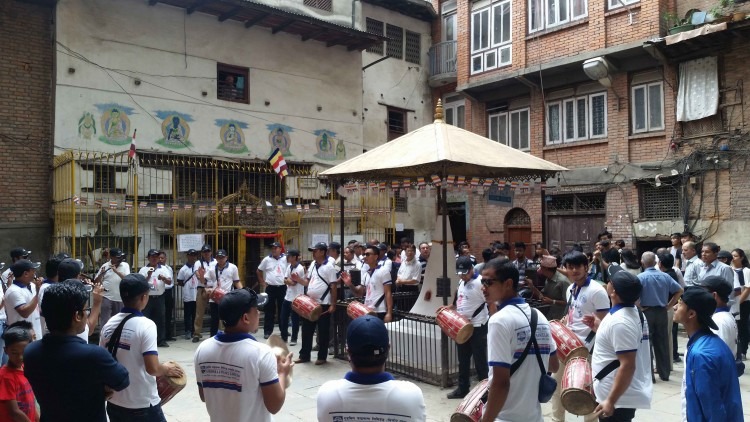
Gunla is the sacred month according to Newari calendar, usually falls during July /August. It is a monsoon season in south Asian countries. Heavy rain, land slide, flooding, road blocks, water born disease outbreak are the major natural disasters happened during monsoon season. People can do nothing except pray to Almighty (Buddha ), to minimize natural disaster and sufferings to people. during this month. Newar Buddhist community gets together at Buddhist holy shrine, monasteries, stupas, temples, and pray for well being of those suffering people and avoid further Natural disaster. For thousand s of years Newar community of Katmandu valley is doing like this for the sake of better humanity even in town of Patan, Buddhist community get together at Bahas and bahis, and chant Namsangiti sutras and dasabalas. In Bhaktapur too Buddhist community get together at bahas / bahis, near stupas and make prayers. The community members (Sangha),of Itumbahal a famous Buddhist monastery, downtown Katmandu, hikes every day early in the morning to Swayambu hill stupa, chants some holy prayers (sutras) like “dasabala suprabhatam”, ( follow ten commandments of Buddha, for better today and wish for good days ahead.) with that the sangha members return back to Itumbaha,followed by the band of traditional music performer from the community at Itumbahal again they chant Hymen and prayers in front of kwapa dyo (sanctum sanatorium) for better days ahead. The process goes on for whole month within sacred month of Gunla include major festival days such as nagpanchami gum punhi (Full moon day ) sa – Paru ,Bahi dyo swo wanegu,, pancha dan etc..all those festivals are celebrated with up most enthusiasm by Newar Buddhist community. Click Here are some of pictures of activities of celebration of Gunla festival at Itumbahal.
‘एकायनो मग्गो’ — एक मात्र मार्ग छ
भगवान बुद्धले संबोधि ज्ञान प्राप्त गरिसकेपछि ४५ वर्षसम्म ग्राम ग्राम नगर नगर परिभ्रमण गरी जनकल्याणको लागि विमुक्ति मार्गको जुन अमूल्य उपदेश दिनुभयो त्यो त्रिपिटकमा संकलित छ । त्रिपिटकको सूत्रपिटक अन्तर्गत दीघनिकाय र मज्झिम निकाय अध्ययन गर्दा एउटा कुरा के स्पष्ट हन्छ भने भगवान बुद्धले जो सुकैलाइ पनि अन्ततोगत्वा दुखवाट विमक्तिको लागि एकमात्र उपाय ध्यानकै कुरा गर्नुहन्थ्यो । तर विशेष रुपमा ध्यानकै सम्वन्धमा उपदेश दिनुभएको सूत्र दीघनिकायको “महासतिपट्ठान सूत्र” र मज्झिम निकायको “सतिपट्ठान सूत्र” मा मात्र उल्लेख भएको पाइन्छ । यो सूत्र बिशेष रुपमा बिमुक्तिमार्गको रुपमा उपदेशित भएको हंदा यो अति महत्वपूर्ण सूत्र हो । सूत्रको शुरुमा नै भगवान बुद्धले यो सतिपट्ठान ध्यान पद्धतिलाइ “एकायनो अयं भिख्खवे, मग्गो सत्तानं बिशुद्धिया” भनेर सम्पूर्ण सत्वहरुको बिशुद्धिको लागि यो एउटै मात्र मार्ग हो भनि भन्नुभएको छ । यो सूत्रको प्रत्येक शव्द शब्दमा ध्यानको प्रक्रीया मार्गनिर्देशित गरिएको छ । भगवान बुद्धले यो उपदेश कुरु स्थित कम्मासधम्म भन्ने नगरमा दिनुभएको थियो । यस सूत्रमा कसरी होशपर्वक क्षण क्षणमा सजग रही यथार्थ बोधद्वारा चित्तलाइ निर्मल गर्दै विमुक्र्तिसम्म पुग्ने भन्ने विवरण उल्लेख छ । यो कनै दार्शनिक मान्यतामा आधारित कुरा मात्रै होइन बल्की प्रकृतिको नियमलाइ आफैभित्र साक्षात्कार गरी वास्तविक सत्यको अववोध गर्दै अघि बढने प्रक्रिया हो । जो कोही पनि यस प्रक्रियावाट अघि बढनाले स्वयं आफूलाई शुद्ध एवं सुखी हंदै गएको अनुभव हुन्छ एवं ढिलो चांडो भव बन्धनवाट मुक्त हने कुरामा विश्वस्त पार्दछ । विमुक्ति याने कि निर्वाण सम्पूर्ण रुपमा दःख निरोधको अवस्था हो । दुःखको मूल कारणनै तृष्णा जनित विकारहरु चित्तमा संचित क्लेश हो । विभिन्न उपायहरु द्वारा यी विकारहरुलाई केही हदसम्म हटाउन वा दवाउन सकिन्छ । तर अनन्तकाल देखि संग्रहित अन्तर्मनको गहिराइमा दबिएर रहेको चित्तमलहरु लाइ जडदेखि नै हटाउनको लागि जुन साधनाको अभ्यास गर्नुपर्ने हो त्यो ध्यान नै सतिपट्ठान विपश्यना ध्यान भावना हो । लेश मात्र पनि चित्तमल बांकी रहेमा विमुक्त हंदैन । विमुक्त हनको लागि संपुर्ण क्लेशहरु जरादेखि नै निर्मूल हन आवश्यक छ । चित्त बिशुद्धिको लागि गरिने सतिपट्ठान ध्यान भावना चार किसिमले गर्नु पर्ने यस सूत्रमा बताइएको छ । यसलाइ चार स्मृति प्रस्थान भनिएको छ । ती हन् ः कायमा कायानुपश्यी भई विहार गर्ने अर्थात शरिरमा शरिरलाइ बिशेष रुपले हेरेर बस्ने वेदनामा वेदनानुपश्यी भई विहार गर्ने अर्थात शरिरभित्रको जुन वेदना ‐तरंग वा उर्जा) को अनुभव हुन्छ त्यही वेदना ‐तरंग वा उर्जा) लाइ बिशेष रुपले हेरेर बस्ने चित्तमा चित्तानुपश्यी भई विहार गर्ने अर्थात चित्तमा चित्तको अवस्थालाइ बिशेष रुपले हेरेर बस्ने धर्ममा धर्मानुपश्यी भई विहार गर्ने अर्थात चित्तले धारण गर्ने जुन स्वभाव हो त्यो स्वभावलाइ बिशेष रुपले हेरेर बस्ने विशेष रुपमा हेर्ने भन्नुको तात्पर्य मनलाइ एकाग्र राखी पूर्ण रुपमा सजग रही यस क्षणमा एवं क्षण क्षणमा के भइरहेको छ त्यसलाई साक्षीभावले प्रत्यक्ष रुपमा जानेर बस्नु हो । यसलाइ विपश्यना भनिन्छ । साधनाको क्रममा चार प्रकारले विशेष रुपमा हेर्ने कार्य नै चार स्मृतिप्रस्थान हन् । १. कायमा कायानुपश्यी भई विहार गर्ने अर्थात शरिरमा शरिरलाइ बिशेष रुपले हेरेर बस्ने ः हामी जसलाइ यो शरिर भनेर ग्रहण गरि बसेका छौं यसको वास्तविक सत्य के हो । यो स्थूल शरिर भित्र के भइरहेको छ साधना विधिद्वारा यसको सूक्ष्मातिसुक्ष्म अनुभव गर्न सकिन्छ । यो कुनै कल्पना, चिन्तन मनन, मत वा सिद्धान्तको आधारमा होइन कि वास्तविक जे जस्तो छ त्यही नै यथाभूत अनुभव गर्ने हो । शरिरलाइ हेर्ने विधि छ प्रकारको बताइएको छ । आनापान, इर्यापथ, संप्रज्ञान, प्रतिकूलमनसिकार, धातुमनसिकार र नवसिवथिक । आनापान ः शरिरभित्र हमेशा विद्यमान रहने नैसर्गिक श्वास प्रश्वास हो । अतः समाधिको महत्वपूर्ण एवं पहिलो खुडकिलो नै श्वास प्रश्वासको सक्रिय अभ्यास हो । अतः एकान्त स्थानमा सरल आसनमा सीधा बसी जीवनभर साथ रहने यो श्वास प्रश्वासलाइ नै प्रमुख प्राथमिकता दिएर क्षण प्रतिक्षण यहि नैसर्गिक सांसको अटूट रुपमा होश बनाइराख्नु नै आनापान अभ्यास हो । लामो भए लामो सांस, छोटो भए छोटो सांस, जे जस्तो प्राकृतिक अवस्थामा चलिरहेको छ त्यही स्वाभाविक एवं सहज रुपमा निरन्तर जानकारी बनाइराख्नु पर्दछ । यसरी आफ्नो तर्फवाट कुनै कृत्रिम प्रयास नगरीकन स्वाभाविक रुपमा सांसलाइ निरन्तर साक्षीभावले हेर्दै जांदा निम्न अवस्थाहरुको अनुभव हुने गर्दछ । सम्पूर्ण शरिर संवेदनशील भइ सर्वत्र तरंग नै तरंगको प्रवाह भैरहेको अनुभव हनु सम्पूर्ण शरिर शान्त भइ सर्वथा प्रशान्तिको अनुभव हनु, शरिरको भित्री गहिराइसम्म विशेष रुपले निरिक्षण गर्न सक्नु, शरिरको बाहिरी सतहमा विशेष रुपले निरिक्षण गर्न सक्नु, शरिरको भित्र र बाहिर गहिराइसम्म एकसाथ विशेष रुपले निरिक्षण गर्न सक्नु, सारा शरिर एवं अंग प्रत्यंगमा उदय व्यय अर्थात उत्पत्ति र क्षय भइरहेको यथार्थ अनित्यवोधको दर्शन गर्न सक्नु इर्यापथः शरिरको अन्य अवस्थाहरु जस्तै बस्दा, उठ्दा, हिंडदा, लेट्दा जुनसुकै अवस्थामा पनि सजग भइ होशपर्वक रहनु पर्दछ । यसले साधनाको निरन्तरता प्रदान गर्दछ । संप्रज्ञानः ध्यानमा सचेत भएर बस्ने तरिका नै संप्रज्ञान हो । हाम्रो शरिर तरंगै तरंगको पुन्ज हो । यस अवस्थासम्ममा साधकले शरिरमा जहां हेर्यो त्यहां तरंगको प्रवाह रहेको अनुभव गर्दछ । यो तरंग क्षण क्षणमा उत्पत्ति र क्षय भइरहेको पनि अनुभव गर्दछ । जीवनको यो अनित्य बोध अनुभवद्वारा थाहा पाउनु प्रज्ञा हो । र यो प्रत्यक्ष ज्ञान संवेदना अर्थात तरंगको माध्यमद्वारा थाहा पाउनु नै संप्रज्ञान हो । सतिपट्ठान साधनाको हर अवस्थामा संप्रज्ञानको साथ हुनु जरुरी छ । प्रतिकूलमनसिकारः साधनाको क्रमा मन कामवासनामा आसक्त भइ ध्यान गर्न कठिन भएको अवस्थामा शरिरमा निहित नवद्वार वाट निस्कने फोहर पदार्थ लगाएत ३२ प्रकारका असुचिहरुको चिन्तन गर्नाले यस प्रकारको कामवासनावाट मन प्रतिकूल हुन गइ ध्यानाभ्यास सहज हने गर्दछ । धातुमनसिकारः यो शरिर चार धातुहरुको समिश्रण हो । पृथ्वीधातु, जलधातु, अग्निधातु र वायोधातु । शरिरमा विद्यमान ठोसपना पृथ्वीधातु हो जस्तै हाड, अस्थिपंजर आदि । यसको स्वभाव हुन्छ भारीपना वा हल्कापन । जतिपनि बग्ने तत्व छन् ती जलधातु हन् । जस्तै रगत, मूत्र, लार आदि । यसको स्वभाव हुन्छ संयोजन यानी जोड्नु । गर्मी, सदीर्, तातोपन वा चिसोपनको अनुभव हुन अग्निधातु विद्यमान हुनु हो । शरिरभित्रको हलन चलन, वायु , ग्यास इत्यादि वायोधातु हन । यी चार तत्व एवं यसको स्वभावको प्रत्यक्ष अनुभूति गर्न सकिन्छ । नवसिवथिकः अत्यधिक गहिरा्े कामवासना प्रतिको आसक्तिलाइ छुटाउन नौ प्रकारवाट बिकृत लाशको अवलोकन गर्ने त्यसवेलाको प्रचलित उपाय यसमा वर्णित गरिएको छ । जुन प्रकारले कायानुपश्यना गर्दा पनि यस प्रकार स्मृति प्रतिष्ठापित हुन्छ कि यस शरिरको यथाभूत सत्यको जानकारी रहीरहन्छ र साधकको मन केवल ज्ञान र दर्शनमा मात्रै टिकीरहेको हुन्छ र चित्त अनासक्त भइ बसीरहेको हन्छ । २. वेदनामा वेदनानुपश्यी भई विहार गर्ने अर्थात शरिरभित्र जुन वेदना ‐तरंग वा उर्जा को अनुभव हुन्छ त्यही वेदना ‐तरंग वा उर्जा लाइ बिशेष रुपले हेरेर बस्नेः ध्यानको क्रममा शरिरभित्र वेदना यानेकि तरंग।उर्जाको अनुभव हुन थाल्दछ । यो अनुभव सुखद
Our Itumbaha
/*! elementor – v3.23.0 – 15-07-2024 */ .elementor-heading-title{padding:0;margin:0;line-height:1}.elementor-widget-heading .elementor-heading-title[class*=elementor-size-]>a{color:inherit;font-size:inherit;line-height:inherit}.elementor-widget-heading .elementor-heading-title.elementor-size-small{font-size:15px}.elementor-widget-heading .elementor-heading-title.elementor-size-medium{font-size:19px}.elementor-widget-heading .elementor-heading-title.elementor-size-large{font-size:29px}.elementor-widget-heading .elementor-heading-title.elementor-size-xl{font-size:39px}.elementor-widget-heading .elementor-heading-title.elementor-size-xxl{font-size:59px} Our Itumbahal Vihar The Bhaskardeva Samskarit Keshavachandra Krit Paravat Mahavihar INTRODUCTION There are eighteen main Mahayana Buddhist Mahaviharas( Great Mahayana Buddhist Monasteries) in Kathmandu Metropolitan City. Among them ITUMBA (Itumbahal) is one of the oldest and most important and famous Mahavihara built at the center of Kantipur city i.e. Kathmandu in the middle of 11th Century AD. Its real and full name in Sanskrit language is Shree BhaskardevaSamskaritaSata Shree KeshavachandraKritParavatMahaviharai.e ITUMBA or Itumbahal in short form and welknown as in local language. BUILDING OF BUDDHIST MONASTERIES (VIHARAS) Shakyamuni Gautam Buddha had once preached to King Bimbisara that amongst the donations the donation of a BauddhaVihara is the best one where the Buddhist monks dwell in, learn and practice the teachings of the Buddhism and finally propagate Buddhism to the laity,the local residents. The teaching of the Buddha encouraged many kings and generous persons and were very much excited to start building Buddhist viharas for the Buddhist BhikshuSangha. King Bimbisara for the first time built VelubanVihara in then Sravasti City and donated to Shakyamuni Buddha. The Shakyas of then Kapilvastu Republic also built NigrodharamVihara for Shakyamuni Buddha to rest in when He returned to Kapilvastu after attaining the Enlightenment at Buddhagaya in 588 BC i.e. in the year 103 AnjanSamvat or MahaSamvat or ShakyaSamvat. Anathapindaka, the famous merchant and sincere devotee of Shakyamuni Buddha, bought land from Prince Jeta and built Jetavana Vihara and donated to the Buddhist Sangha as well. And so, after that many many Buddhist viharas (Monasteries) were built by rich and generous persons for getting good merit in this very rear human life. THE FIRST SANGHA Shakya Prince Siddhartha after viewing the four heart touching scenes of an old man, a sick man, a dead body and a calm and peaceful saint renounced the luxurious worldly life of the Royal Palace and spent an ascetic simple life roaming here and there in search of the supreme knowledge and eternal peace. After the hard practice of six years meditation at last, He was successful in attaining the supreme knowledge and had become the Buddha 2600 years ago under the holy Bodhi tree at Buddha Gaya in the year 103 AnjanSamvat or MahaSamvat or ShakyaSamvat that is to say in 588 BC. He, first of all, carefully reexamined the knowledge he has attained for seven weeks by himself once again. Then after conforming that he has really attained the enlightenment without any doubt he gave his first Sermon to the five sages known as PANCHA VAGGIA on the full moon day of the month of ASHADA (July-August) at Mrigadavana; the Deer Park at Saranath in the year 103 AnjanSamvat or MahaSamvat or ShakyaSamvat that is to say in 588 BC i.e. 2600 years ago. All of the five sages became Bhikkus i.e. Buddhist Monks and thus laid the foundation of BhikkhuSangha and formed the first Buddhist Sangha by Shakyamuni, the Buddha himself 2600 years ago. The numbers of the Buddhists Sangha increased day by day. Most of the Shakya princes and other followers became Bhikkhus under the spiritual guidance of Shakyamuni Buddha. Those who had renounced the world and became Bhikkhu could not live in the general house. So separate dwelling places were built as the learning and living places for the Bhikkhus i.e. Buddhist monks. The dwelling places built for the Buddhist monks were known as Ashram or Viharai.e.Buddhist monasteries. So the Buddhist Viharas are as old as the Buddhism itself. DONATION OF VIHARA Therefore the history of Buddhist Viharas can be traced back to the 6th century B.C. Since then many Viharas were built at different places for the Buddhist monks by different persons of good wealth. One day King Bimbisara also donated Venubana for the Buddhist Sangha as Buddha had preached that amongst the donations the donation of Vihara is the best one where the Buddhist monks dwell in for the propagation of Buddhism. In Kathmandu, viharas were built during the period of Licchavi kings. The history book of ancient Nepal indicates at least twenty names of Buddhist Viharas of the Licchavi period in Katmandu valley. ITUMBA : A HISTORICAL BACKGROUND There were eighteen main Buddhist Mahaviharas in the Kathmandu valley. Among them Bhaskar deva Samskarita Shree Keshachandra Krit Paravata Mahavihara (Itumbaha) is one of the oldest and most important Vihara in Katmandu valley. It is believed that this Mahavihara is built after the visit of Shakyamuni Gautam Buddha in Kathmandu Valley for the Darshan of the Swayambhoo Jyotirupa Mahachaitya. It is built for those Buddhist monks who ordained into Buddhist order of the Sangha by hearing the preaching of the Buddha. That is why Itumbahal is one of the very ancient Mahayana Viharas of Kathmandu valley. The Dharmadutas of the Emperor Ashoka had visited this Vihara and had ordered to built an Ashokan Caitya here at Itumbahal which is still existing in proper condition at the center of the Vihara courtyard. However it very difficult to mention the accurate day and date on which the vihara was Constructed and consecrated. The most authentic historical evidences are yet to be found out regarding the accurate day and date of construction of this Vihara. Almost all of the historians, however believe that this Vihara is one of the oldest Viharas in the Kathmandu valley. In Kathmandu valley most of the Buddhist Viharas were built during the period of Lichchhavi kings. If we analyze the Sanskrit names of the Vihara, we find the words as ” BhaskardevaSamskarita “. This means that the Vihara was brought into existence by the King Bhaskardeva that is to say the Vihara was built by Bhaskardeva. If we go